A: Our equipment solutions support a wide range of plating processes, including copper plating, nickel plating, chromium plating, tin plating, gold plating, silver plating, and alloy plating (such as tin-cobalt alloy and nickel-phosphorus alloy). Configurations can be customized according to the specific product requirements of our clients.
Products
A wide range of products
Contact Us
Automation Equipment
Application Scenarios & Advantages
This highly versatile automation system replaces manual labor across single-product electroplating and its pre/post-treatments, enabling 24/7 continuous operation for both rack and barrel plating to support unmanned, intelligent, and green workshops. Key automated processes—loading/unloading, transfer, switching, shuttle transport, robotic collaboration, inspection, and packaging—are designed to reduce labor intensity, improve working conditions, and significantly cut workforce, energy, and material costs, laying a strong foundation for enterprises to achieve cost reduction, efficiency enhancement, and cleaner production.
This highly versatile automation system replaces manual labor across single-product electroplating and its pre/post-treatments, enabling 24/7 continuous operation for both rack and barrel plating to support unmanned, intelligent, and green workshops. Key automated processes—loading/unloading, transfer, switching, shuttle transport, robotic collaboration, inspection, and packaging—are designed to reduce labor intensity, improve working conditions, and significantly cut workforce, energy, and material costs, laying a strong foundation for enterprises to achieve cost reduction, efficiency enhancement, and cleaner production.
Barrel Plating Automatic Loading/Unloading Equipment
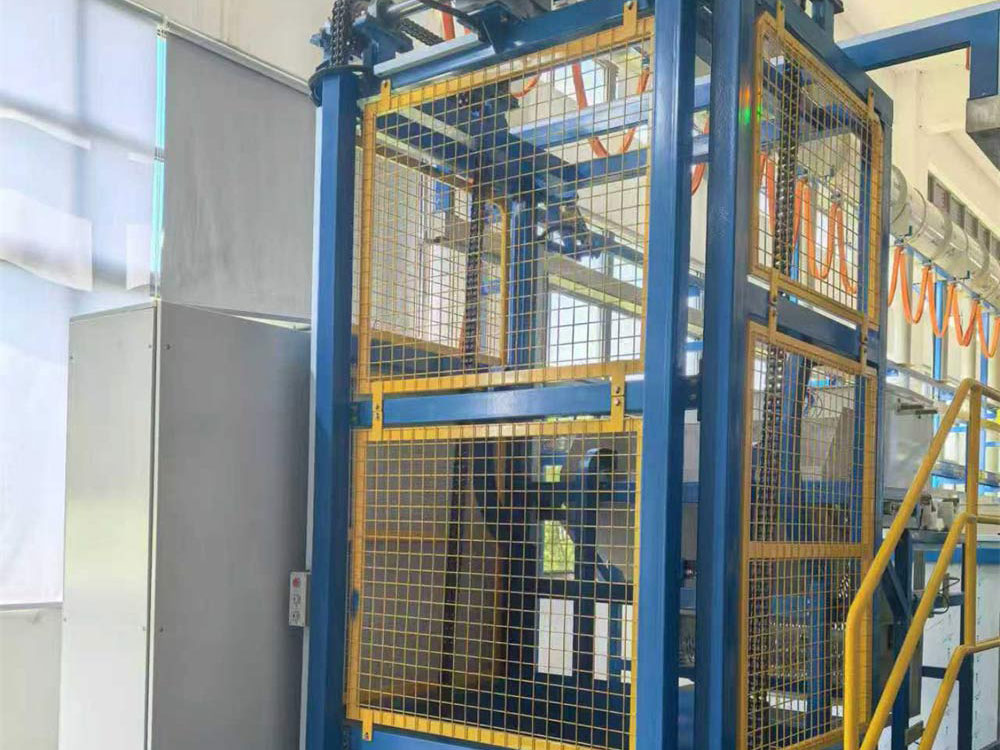
Barrel plating automatic loading/unloading equipment is an automated auxiliary system specifically designed for barrel plating production lines, aiming to replace manual handling of workpiece loading and unloading during the barrel plating process. Its core function lies in achieving continuous automated flow for barrel plating production, minimizing human intervention, thereby enhancing production efficiency, reducing labor intensity, and ensuring uniform workpiece handling.The Robotic Transfer Arm
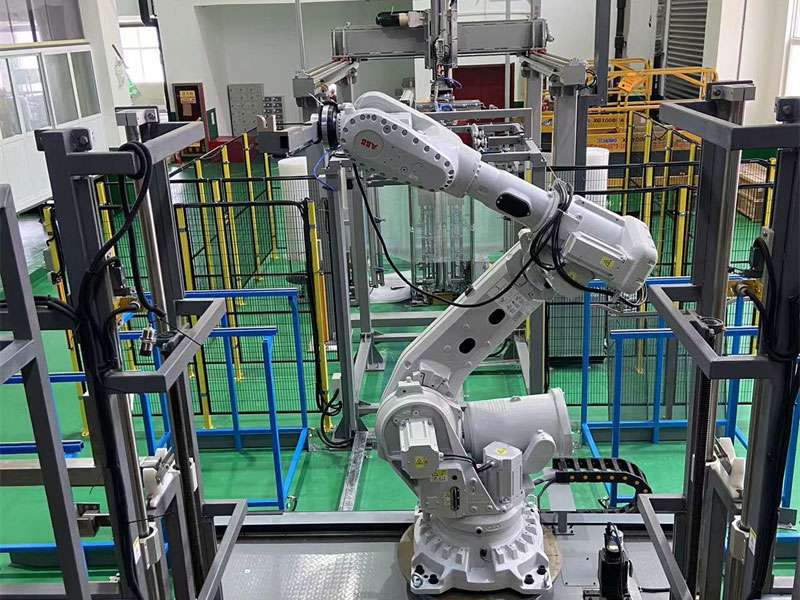
The Robotic Transfer Arm is a high-efficiency, precision-engineered solution designed for flexible and adaptable operation, mimicking human motion to replace manual tasks. It reduces labor intensity and minimizes secondary contamination during processes. Unaffected by workshop conditions, the robotic arm is capable of operating in dark environments, enabling fully automated, “lights-out” production, improving overall efficiency and consistency.High-Speed Shuttle System
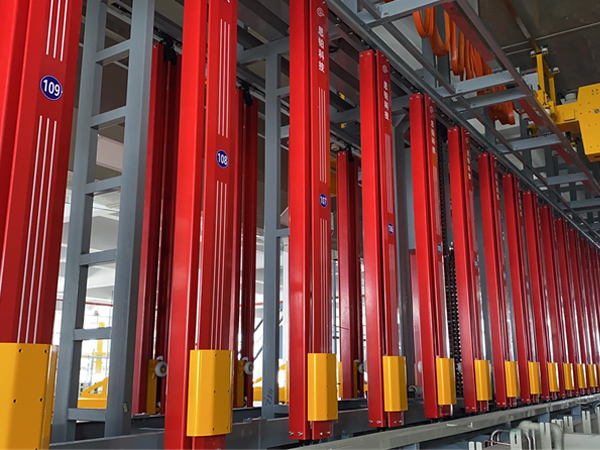
High-Speed Shuttle System significantly reduce workpiece transfer time between plating tanks through high-speed and stable material handling. This effectively optimizes overall production line cycle time, serving as a critical guarantee for achieving efficient and automated electroplating operations.Automatic Transfer and Switching System
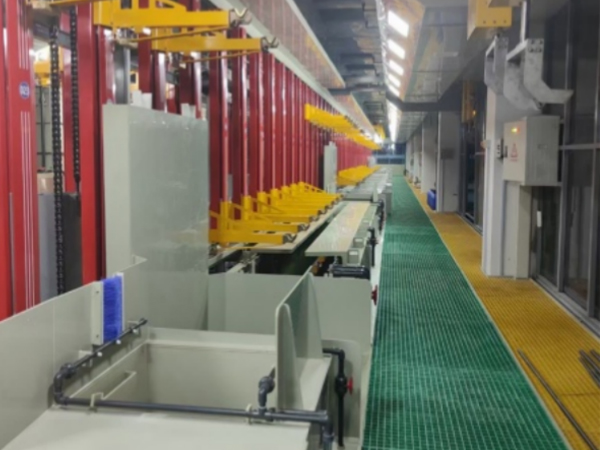
Automatic Transfer and Switching System enable precise control of workpiece movement between plating tanks and dwell times according to preset programs. This effectively eliminates variations caused by manual operation, ensuring highly consistent coating thickness and quality for every batch. It serves as critical equipment for achieving stable and efficient mass production.
FREQUENTLY ASKED QUESTIONS
Product FAQ's
-
Q1: What plating types are your electroplating equipment solutions suitable for?
-
Q2: How do you ensure the stability and consistency of electroplating quality?
A: From the planning stage, we consider critical factors such as current density distribution, electric field uniformity, and bath circulation methods to ensure coating quality. Our production lines are equipped with automated monitoring systems that regulate parameters including current, temperature, and pH value in real time, guaranteeing consistent coating thickness, adhesion, and appearance in mass production.
-
Q3: What are the common plating defects and how can they be avoided?
A: Common defects include poor adhesion, pitting, burning, uneven color, and peeling. These are often related to bath composition, current density, temperature, and impurity contamination. Our pre-sales planning optimizes process parameters for your specific product characteristics, and our after-sales technical team can assist in quickly diagnosing and resolving any production issues that arise.
-
Q4: What discharge standards can your wastewater treatment system meet?
A: Our wastewater treatment system solutions are custom-designed according to the environmental requirements of your plant's location. They can meet the "Emission Standard of Pollutants for Electroplating" (GB21900-2008) as well as stricter local discharge limits, including compliant treatment of characteristic pollutants such as chromium, nickel, and cyanide.
-
Q5: What pollutants does the exhaust gas treatment system primarily handle?
A: The exhaust gases generated during electroplating processes mainly include hydrogen chloride, chromic acid mist, sulfuric acid mist, nitrogen oxides, hydrogen cyanide, and fluorides. Our exhaust gas treatment system solutions are equipped with corresponding purification devices tailored to different gas types, ensuring that both workshop air quality and boundary emissions fully comply with regulatory standards.

JOIN US
LOVE TO HEAR FROM YOU GET IN TOUCH!
Please fill out the form below and we will get back to you as soon as possible.